


In early 2026, the atmosphere over the Iranian plateau is charged with a tension that is not merely political but rather reminiscent of sacred texts in its depth. This is a historic “Kairos” (divine moment) when the weight of forty years of theocratic stagnation finally collides with the unstoppable force of the human spirit’s quest for dignity. Walking the streets of Tehran or Isfahan today is to witness a nation in the throes of a social and spiritual birth. For a global Christian observer, these events are not just another headline in the Middle East’s weary cycle of conflict; they are a concrete manifestation of the eternal struggle between structures of human oppression and the divine spark of freedom that dwells in the depths of every soul.
Writing from a perspective grounded in Scripture, it is impossible not to mourn deeply for the bloodshed, yet we cannot ignore the rising hope for a people’s restoration. The Iranian regime, which has long functioned like a modern Babylon, is learning the hard way that no fortress can withstand the winds of change blowing with the breath of a people who have lost their fear. However, while advocating for the overthrow of an oppressive system, we must also keep in mind the “Peace of Christ” (Shalom). This peace aims not only at the destruction of the old order but also at the protection of the innocent and the preservation of stability in a region that has seen too much suffering.
At the heart of Christian witness in Iran lies the doctrine of Imago Dei, the belief that every man, woman, and child is created in the image and likeness of God. This is the silent engine of the revolution. When a young woman in Tabriz refuses to bow to the “Morality Police” or when a father in Shiraz asks about the fate of his missing son, they are not just shouting political slogans; they are proclaiming a theological truth. They declare that their values are not bestowed by the state but given by the Creator Himself. A regime that systematically dehumanizes its own subjects, using torture as a tool of governance and execution as a method of public communication, has placed itself directly in opposition to God’s character. In the biblical narrative, God is always the one who hears the cry of the oppressed. From the Israelites under Pharaoh to the poor under the corrupt kings of Judah, the message of the Holy Scriptures is clear: God is not neutral in the face of injustice. He is a God who “brings down rulers from their thrones but lifts up the humble.”

Therefore, the collapse of such a regime is a step toward realigning the earthly order with the moral order of the universe. However, the Christian perspective adds a layer of depth missing from secular geopolitical discourse: While we celebrate the breaking of the yoke, we also mourn the chaos that often follows the collapse of empires. The Bible calls us not to be agents of anarchy, but “servants of reconciliation.” The greatest danger of the 2026 crisis is that the void left by a dying theocracy will be filled by a more predatory force, or that the country will be dragged into a sectarian bloodbath that will swallow the very people we want to liberate. This is where the wisdom of being “wise as serpents and harmless as doves” becomes vital.
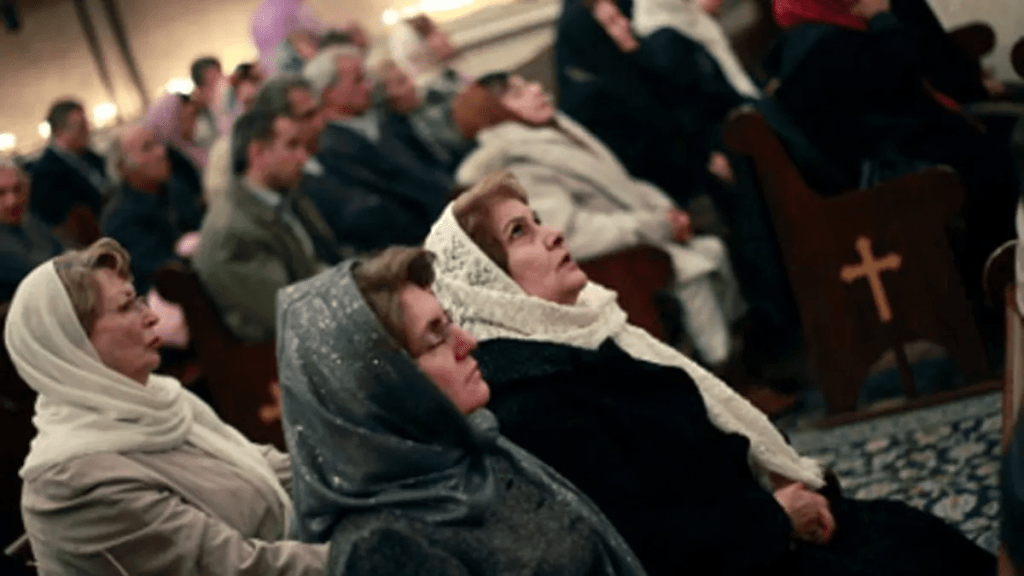
For Iranian Christians—the world’s fastest-growing underground church—this crisis is their Garden of Gethsemane. Mostly of Islamic background, these believers have lived in the shadows for decades. They gathered in secret basements, whispered their hymns, and shared their Bibles like contraband diamonds. In the eyes of the current state, they are “apostates” and a “threat to national security.” Yet in the eyes of their neighbors, they have become “the sweet fragrance of Christ.” As the regime’s legitimacy crumbled, the Church rose not as a political party but as a radical community of love. They were the ones who opened their homes to the wounded during the 2026 attacks. They were the ones who prayed for the guards who once interrogated them. This is the “New Commandment” in action: to love your enemies and pray for those who persecute you. In doing so, they show the Iranian people a form of faith that is the exact opposite of the state religion that has left them hollow.
For Iranian Christians—the world’s fastest-growing underground church—this crisis is their Garden of Gethsemane. Mostly of Islamic background, these believers have lived in the shadows for decades.
The regional risks of this conflict cannot be underestimated. Iran is not an island; it is the keystone of the Middle East. A violent and uncontrolled collapse would send shockwaves from the Mediterranean to the Indus River. We must remember the principle of “seeking the welfare of the city.” When the prophet Jeremiah told the exiles in Babylon to pray for the welfare of the city that held them captive, he was teaching a profound lesson in interconnectedness. If Iran burns, its smoke will choke the children of Iraq, the families of Lebanon, and the villagers of Afghanistan. Therefore, the Christian call is for a “Just Transition.” While supporting the dismantling of the repressive apparatus, we must also advocate for the preservation of the social fabric. This requires a commitment to honesty that diagnoses the regime’s crimes without resorting to dehumanizing rhetoric that fuels cycles of revenge.
One of the most poignant symbols of the current struggle is the inter-ethnic solidarity emerging within the Iranian church. For years, the regime maintained its power through a “divide and rule” strategy that pitted Persians against Kurds and Azeris against Baluchis. But in-house churches, these walls have come down. In Christ there is neither Persian nor Kurd, neither “insider” nor “infidel.” This unity is a blueprint for the nation’s future. It whispers that a post-theocracy Iran need not be a fragmented Iran. A mosaic where diversity is a strength, not a weakness, is possible. The church is currently the only institution in Iran successfully modeling a multicultural and egalitarian society under pressure. As the old guardians fall, the lessons of the underground church—lessons of forgiveness, shared leadership, and selfless service—will be its most valuable export to the new civil society.
The issue of “sovereignty” also occupies a large place in our Bible-based thinking. We believe that “the earth and everything in it belongs to the Lord.” Governments are temporary stewards of God’s justice. When a government fails in its primary duty to protect the innocent and promote the good, it loses its authority. Iran’s leadership traded this authority for a bowl of soup—for power, wealth, and ideological purity. The result is a spiritually and economically bankrupt nation. The Christian response to this is not to call for a new “Christian State”—for the history of such structures is also littered with their own failures—but rather to call for a “Just State.” A state where God’s “Common Grace” is reflected in laws that protect religious freedom, freedom of expression, and the right to peaceful assembly. An Iran where a Christian, a Muslim, a Baha’i, and an atheist can sit in a cafe in Isfahan and discuss their country’s future without fear of “the prison of the home” would be an Iran that reflects God’s heart much more closely than the current regime.
Furthermore, we must mention the “Service of Tears.” As war and internal strife intensify in 2026, the Christian community must be “weeping with those who weep.” There is a tendency in political analysis to look at terms like “acceptable losses” or “strategic damage.” From a biblical perspective, there is no such thing as an acceptable loss. Every life lost is a tragedy of infinite proportions. We must resist the urge to view the Iranian people as pawns in a global chess match between East and West. They are sons and daughters, mothers and fathers. The Christian perspective must focus on the human being. We must advocate for humanitarian corridors, for the protection of hospitals, and for the rights of the millions of refugees already fleeing across borders. Our compassion must be as broad as our theology.
As we look toward the horizon of 2026 and beyond, we remember this promise from the book of Revelation: “Behold, I am making all things new.” This is not just a promise for the end of time; it is a promise that God is constantly at work in history, bringing life out of death. The “Persian Winter” has been long and harsh, but the signs of spring are undeniable. The church in Iran, though small in the eyes of the world, is like yeast in dough or a mustard seed in a field. It is a quiet and persistent force for transformation. The collapse of the regime will be a moment of great danger, but it will also be a unique opportunity for the Gospel of Peace to take root in soil plowed by suffering and watered by the tears of saints.
We must be specific in our prayers for Iran. We pray for the regime’s “Pretorians” (guards), that their consciences may awaken and they may refuse to fire on their own people. We pray for activists and student leaders that they may be given wisdom from above, first pure, then peaceable, gentle, and full of mercy. We pray for the international community that they act not opportunistically, but with a steward’s conscience. And most of all, we pray for the Church in Iran, that they remain faithful to the way of the Cross, resist the temptation to seek power for themselves, and instead continue to be “foot washers” for a weary and dusty nation.
The road ahead is narrow and fraught with danger. There is no guarantee that the transition will be smooth or that the new dawn will not be clouded by new storms. But we serve a God who “makes a way in the wilderness and rivers in the desert.” Iran’s history is being written neither by Ayatollahs nor by foreign generals. History is being written by the Sovereign Lord, who “has appointed times for people to seek Him and has set the exact boundaries of the places they will live.” The Iranian people are a noble people whose roots go back to Cyrus the Great—the man whom God called His “anointed one” because of his role in liberating the people of Israel in the Holy Scriptures. Our greatest prayer is that today’s world leaders will follow this ancient example of liberation and that the Iranian people will finally come to the light of both physical and spiritual freedom.
Ultimately, the story of Iran in 2026 is a story of hope. It is the hope that no prison cell is dark enough to extinguish the light of Truth. It is the hope that “love and faithfulness will meet, and justice and peace will kiss.” When this kiss finally takes place on the streets of Tehran, the world will see that the Gospel is not just a dry set of doctrines; it is a living, breathing power that can transform a valley of dry bones into a living army of free men and women. We stand with the Iranian people not only in their struggle for a better government but also in their journey to God’s heart, where every tear will be wiped away and “there will be no more death, mourning, crying, or pain.” This is the vision that sustains the underground church, and this vision will ultimately rebuild the ruins of these beautiful but broken lands.